Changing food insecurity trajectory is daunting; however, Catholic sisters are working quietly to address the challenge in their localities in Africa – saving one life at a time. They are teaching by example –practicing sustainable and ecofriendly agriculture to ensure that there is sufficient food in their communities.
Providing these services can not only be daunting, but challenging, amidst the effects of global climate change that is resulting in food insecurity, among other concerns. Today food insecurity is affecting millions globally; adverse health implications impact many in developing nations. Moreover, sisters know too well the difficulties involved in teaching and giving medicine to hungry children, whether in sprawling slums, refugee camps, or rural arid and semi-arid areas. The issue of food insecurity is broad, affecting families and especially children, who are being pushed into child labor or dropping out of school with the aim of helping provide food for their families.
Food insecurity is common in developing countries
Hunger is a painful sensation caused by the need for food. Chronic hunger can not only be devastating but also leads to malnourishment due to deprivation of essential nutrients. It is traumatizing for hungry individuals, particularly when there is no hope of having food in the near future. Food insecurity is common in the world but is pronounced in the developing countries. A 2013 United Nations Food and Agricultural Organization report indicated that there are 870 million undernourished people globally; of these, 852 million live in developing nations (FAO, 2013).
Undernourishment refers lack of dietary supply in a person’s meal plan. The report points out that undernourishment persists in Africa as illustrated by the figures – from 1990-1992, 32.8% of the population in Africa qualified as undernourished; 1999-2001, 20.0%; 2004-06, 27.2%; 2007-09, 26.5%; and 2010-12, 26.8% (FAO, 2013). Africa recorded the highest number of hungry people in the world from 175 million to 239 million – that is a nearly 20 million increase (2013 World Hunger and Poverty Facts and Statistics).
While these daunting numbers indicate chronic undernourishment in sub-Sahara Africa there are disparities between countries. According to a 2014 World Food Program report food insecure people increased from 1.3 million in Kenya to 1.5 million in less than a year, particularly in marginal areas. Similarly, a 2014 USAID report revealed that undernourishment continues to be a concern in Uganda and 3.9 million endure food insecurity in South Sudan and the upper Nile region. Populations adversely affected include children age five and below and girls. Poor nutrition is the cause of 10.9 million child related deaths; malnourished children are unable to fight childhood and infectious diseases, including malaria and measles. In Africa girls are more affected because they have to travel over four miles daily in some regions, in search of water, thereby missing school – perpetuating women marginalization.
Several factors contribute to food insecurity in Africa (e.g. low food production, the effects of climate change, drought, poor land use and ownership, civil strife, crop diseases, inadequate farming methods, soil depletion, and poverty). Combined, these factors are leading to chronic starvation and malnutrition; food insecurity hits hard to rural and urban poor. Food insecurity has untold consequences including stunted growth, inability to fight disease, increased child mortality, and school dropout. The cycle of poverty continues in the affected families.
Supposedly, most of the sub-Saharan countries rely on agriculture for economic growth and sustenance, accounting for 30 percent of economic generation. The per capita income for most countries is below 2 $1,500 (in 2013, Zambia $900; Uganda, $1,500; South Sudan, $1,400), making it difficult for rural or urban dwellers to meet the demands of a changing global economy as well as to ascertain nutritional food for their families. Notably, reliance on agriculture depletes the soil wwhich in turn leads to low production; agriculture may not at the end spur economic growth and sustenance, as has been hoped in Africa. While irrigation can be used to increase food security it requires planning, skills, and capital availability to farmers. To ensure increased food production, high yielding crops, agricultural education provision, and selection of food crops that do well in particular areas, as well as providing soft loans or microfinance programs to farmers, can be key strategies to increasing productivity and to cushion against drought.
Changing food insecurity trajectory is daunting; however, Catholic sisters are working quietly to address the challenge in their localities in Africa – saving one life at a time. They are teaching by example –practicing sustainable and ecofriendly agriculture to ensure that there is sufficient food in their communities. Strengthening sustainable food production is multidimensional; it involves crop production, better nutrition and higher rural incomes from the same set of inputs that include land, water, and seeds – while reducing environmental impacts.
What can we learn from the sisters and how can we disseminate knowledge to communities in sub-Sahara Africa? While counting calories is the norm in western world, in Africa, the rural and urban poor focus not on nutrition but on merely having enough to eat. The big question for families, is do we have a meal for dinner, irrespective of nutritional contents.
A recent visit to several agricultural ministries run by alumnae of the Sisters Leadership Development Initiative revealed that sustainable and eco-friendly agriculture is possible in Africa. All that is needed is some knowledge, commitment, patience, persistence, hard work and capital to set the initial project.
Evidence from the successes and productivity in these agricultural projects suggests that food security is attainable. These sisters are creatively changing the trajectory of food insecurity by utilizing alternative farming methods to train more farmers and to ensure long term impacts. The process of ensuring food security will thus provide capital and employment, thereby, curbing undernourishment and malnutrition and improving life for the school children.
Encouraging individuals, organizations and corporations to work together to invest towards food security in Africa is important. Sister’s agricultural projects have a trickling effect to the community for they provide employment and supplement nutrition. Local people apply similar farming methods to improve food production and add soil nutrients. Also, they can send their children to school because they are self-employed.
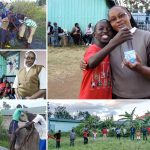
2014 Site Visits – Ghana, Uganda and Kenya:
- Sr. Susan is project director of a 70-acre farm
- Sr. Catherine created a biogas digester plant and teaches young boys to farm
- Sr. Susan Wanjiru and SLDI alumnae direct a dairy farming project
- Sisters establish pig rearing for food and income generating projects
- Sister Rose initiates a high yielding mushroom project
Like Jesus, sisters are teaching by example. They are teaching not by word alone, but through their action.
Changing attitudes is a difficult process, but when we succeed in doing so and we start seeing that change affecting others, the end is transformation, thereby, ensuring food security for all. The Catholic sisters work to ensure food security is changing one life at a time; teaching by example, their work is curbing malnutrition and increasing security in Africa!
2014 SLDI/ HESA Site Visit – Ghana, Uganda and Kenya (Full Report)
Be a Ray of Hope
Communities across Africa are counting on Catholic Sisters, but 48 lack the education needed to carry out their important mission work. You can be a Ray of Hope for a Sister who needs you by donating to her education today.
This article is addressing the following UN Sustainable Development Goal(s):