

ASEC alumna Sr. Rose Ochier, CP, is using the leadership and administrative skills gained through SLDI to advance climate-smart agriculture, food security, and sustainable livelihoods in Kenya. From securing resources for children and communities to developing innovative agricultural solutions, her journey demonstrates how education can create lasting impact.
I am Sr. Rose Ochier, CP, a Passionist Sister from Kenya, an ASEC alumna of the SLDI Administration Track, and an Executive Member of the ASEC Alumni Association of Kenya. I am currently pursuing a Master of Science (MSc) Degree in Crop Protection (Agricultural Entomology) at Egerton University while volunteering with women, youth, and junior farmers to promote climate-smart agriculture and food security.
My journey with ASEC began in 2017 when I enrolled in the SLDI Administration Track. The program equipped me with practical skills in administration, technology, leadership, and proposal writing that continue to shape both my ministry and professional life. More importantly, it gave me the confidence to step into leadership roles, mobilize resources, and share knowledge that benefits the communities I serve.
One of the most valuable lessons I gained through SLDI was learning how to identify community needs and turn ideas into action. Using the proposal-writing skills I developed through ASEC, I secured funding for a new classroom at St. Mary Goretti Education Centre in Molo and have continued to write successful proposals that support the feeding program at St. Paul of the Cross Children’s Home. I also helped secure local government support for food assistance, ensuring more consistent nutrition for the children in our care.
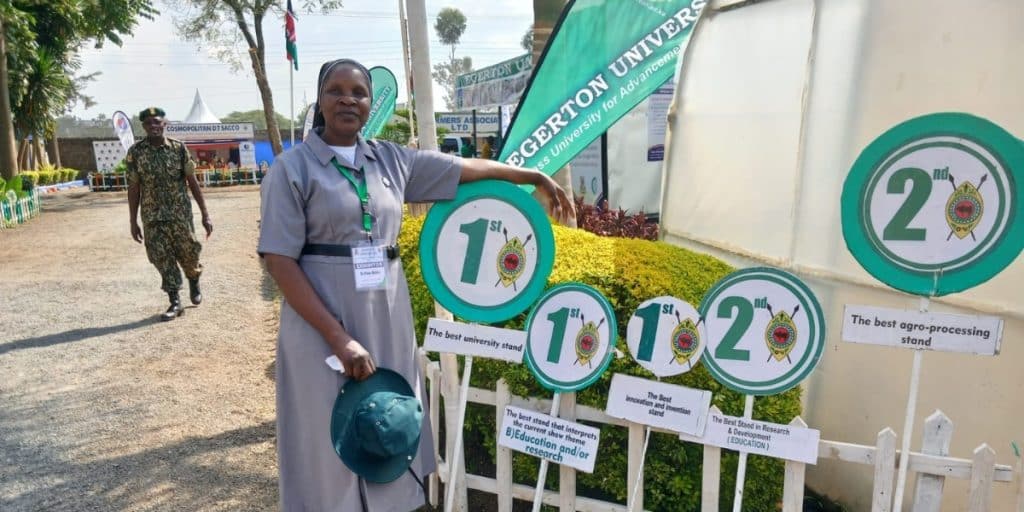
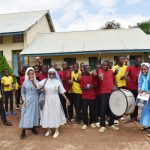
My passion for sustainable agriculture has allowed me to combine education with service. As a community volunteer, I work alongside women, youth, and farmer groups to promote climate-smart agriculture through intensive vegetable production, agroforestry, food preservation, and regenerative farming practices that improve household food security. At St. Paul of the Cross Children’s Home, I established a vegetable and fruit garden that improves children’s nutrition, reduces food costs, and serves as a practical learning site for young farmers and community members. I also manage a demonstration apiary with three beehives, using beekeeping as a tool to teach sustainable livelihoods and environmental stewardship. Last year, we harvested approximately 20 liters of honey, demonstrating how beekeeping can generate income while supporting biodiversity through pollination.
The leadership and administrative skills I gained through SLDI also prepared me to serve as bursar for the Passionist Sisters in Kenya for three years, where I was entrusted with promoting accountability and responsible stewardship of our congregation’s resources.

ASEC’s investment in my education has continued long after my graduation. In June 2026, I had the privilege of participating in the African Regional Conference on Refugees and Migrants, organized through Our Common Home (OCH), an initiative of Villanova University in partnership with ASEC, at Tangaza University in Nairobi, Kenya. During the conference, I shared both my academic research and my experiences working alongside farming communities to improve food security and environmental sustainability. The opportunity also allowed me to connect with scholars, religious sisters, and community leaders from across Africa who share a commitment to serving vulnerable populations.
The conference became another turning point in my journey. Through conversations with fellow participants, I was invited to submit an abstract for an international sustainability conference in Rome, providing an opportunity to share my research and community-based initiatives on a global stage. Shortly afterward, I was also invited to exhibit my master’s research at the Nakuru National Agricultural Show, where I presented an environmentally friendly pest management and plant nutrition product developed through my research. With the support of Egerton University, the innovation is now undergoing the patenting process. These opportunities build upon other recognitions I have received, including a Student Recognition Award through the Project Henri Prize for my contributions to integral ecology and sustainable development.

Looking back, I see that ASEC did more than provide me with education—it empowered me to become a leader, a resource mobilizer, an educator, and a bridge between academic research and practical community solutions. The opportunities ASEC continues to provide through alumni engagement have expanded my professional network, strengthened my leadership, and opened doors I never imagined possible.
I am deeply grateful to ASEC, the Conrad N. Hilton Foundation, and everyone who has invested in my formation. Their support has transformed not only my own life but also the lives of the women, youth, children, and farming communities I have the privilege to serve. I remain committed to using the knowledge, relationships, and opportunities gained through SLDI to advance food security, care for our common home, and create lasting change in the communities I accompany.
Be sure to watch for Sr. Rose’s input at Villanova University’s 2026 International Sustainability Conference, October 12-15, 2026, at the Patristicum in Rome, Italy.
Be a Ray of Hope
Communities across Africa are counting on Catholic Sisters, but 48 lack the education needed to carry out their important mission work. You can be a Ray of Hope for a Sister who needs you by donating to her education today.
This article is addressing the following UN Sustainable Development Goal(s):
Sr. Rose Ochier, CP
Author

Leave a Reply