
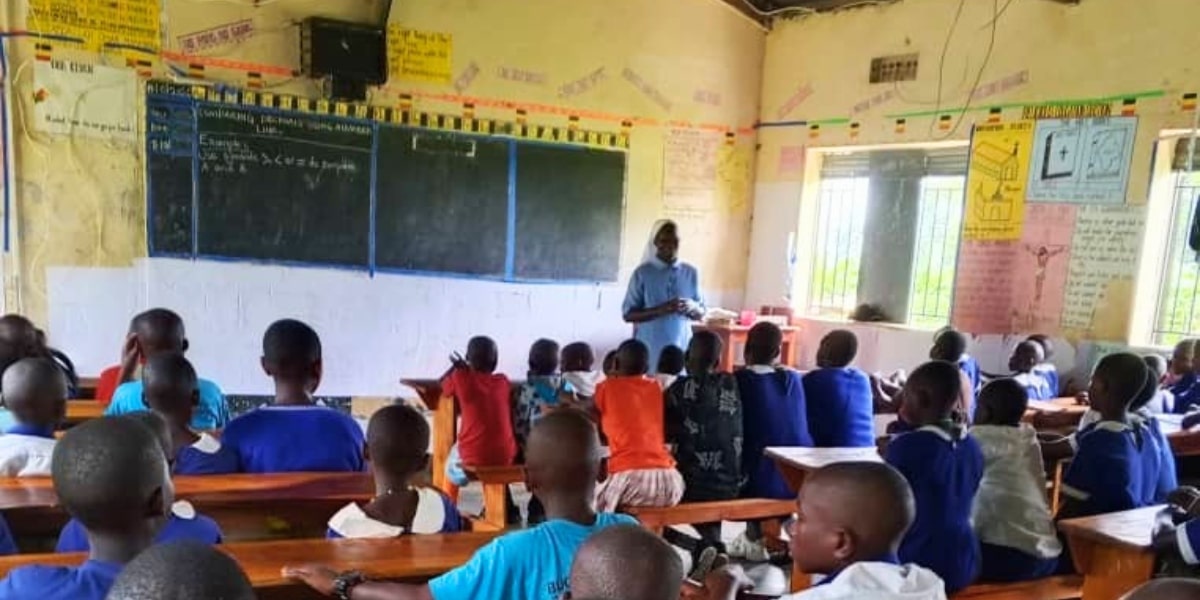
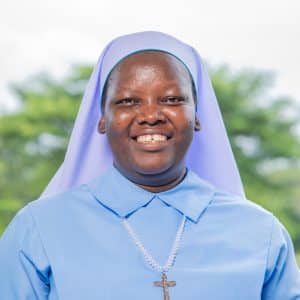
HESA alumni Sr. Juliana Charik, MCESM, and her colleagues are helping protect students and promote health awareness in Uganda amid Ebola concerns near the DRC border. Her story highlights the vital role Catholic sisters play in supporting community health and safety during public health crises.
Caregivers bear a heavy burden during disease outbreaks, facing intense physical, emotional, and financial strain as they support those who are ill amid widespread health risks, economic hardship, and social disruption. In Africa, Catholic sisters are always at the forefront, providing services in diverse areas including healthcare, education, social services, and community development, addressing some of the most pressing needs in their communities. The African Sisters Education Collaborative (ASEC) supports these ministries by providing educational opportunities, technology resources, and capacity-building programs that enable sisters to expand their impact and respond effectively to evolving community needs. During public health crises, such as the Ebola outbreak in eastern Democratic Republic of Congo (DRC), sisters often play a critical role in community education, healthcare outreach, and support services.
In Bundibugyo District, which borders the Democratic Republic of Congo, ASEC Higher Education for Sisters in Africa (HESA) program alumni Sr. Juliana Charik, MCESM, and her colleagues continue to implement measures to help keep students safe while allowing learning to continue at the primary school where she serves. Due to a large student population, classes have been divided into morning and afternoon shifts to reduce crowding, and classroom seating has been adjusted to increase spacing between students.
The school also has increased health awareness efforts among students and parents. Handwashing stations with soap and water are available throughout the school, and community members have been encouraged to remain vigilant and report to local authorities any individuals sneaking into the area via the open border.
“So far, our school and the community are safe because everyone is cooperating,” Sr. Juliana shared.
Sr. Juliana’s experience highlights the important role sisters play in educating communities, promoting public health practices, and responding to local challenges during times of crisis like the Ebola outbreak.
The recent Ebola outbreak also led to the postponement and cancellation of several major religious events in Uganda, highlighting the broad impact of public health emergencies on faith communities and the importance of well-equipped religious leaders in responding to such challenges.
Public health concerns related to an Ebola outbreak in eastern DRC have led to the postponement and cancellation of several major religious events in Uganda.
This year, the annual June 3rd Uganda’s Martyrs Day celebration, which honors the 22 Uganda Martyrs and draws pilgrims from across East Africa and beyond, was postponed this year due to concerns about the spread of Ebola. The decision came after consultations between Uganda’s President Yoweri Kaguta Museveni, the National Epidemic Response Task Force, and religious leaders.
According to the report 1, officials cited concerns about increased cross-border movement from Ebola-affected areas. Pilgrims from Uganda, Kenya, Tanzania, South Sudan, Nigeria, Malawi, Zambia, and Zimbabwe were expected to participate in the celebrations.
The postponement affected many pilgrims who had already begun their journeys to the Uganda Martyrs Shrine in Namugongo, some of whom were traveling long distances on foot. It also impacted dioceses and organizing committees that had spent months preparing for the event.
A religious sister serving on the Central Organizing Committee in Kasese Diocese, which was scheduled to lead the 2026 Uganda Martyrs Day liturgical celebration, shared that preparations had been underway since July of last year. Materials and supplies for this year’s celebration had already been purchased and labeled. The postponement resulted in frustration among organizers who had invested significant time and resources in planning.
The impact extended beyond the Martyrs Day celebrations. In response to the public health guidance, the Association of Religious in Uganda (ARU) cancelled its Annual General Meeting, which was scheduled to take place in early June in Kampala. The association also cancelled an inter-congregational novices’ course that was scheduled to run through the end of June.
Additionally, ARU relocated an international meeting planned for July from Uganda to Zambia. According to the report, these changes are expected to affect the association financially because it will no longer receive revenue associated with hosting the programs and events.
While religious organizations adjusted plans and events across Uganda, Catholic sisters serving in communities near the Uganda-DRC border have also taken up action to help prevent the spread of Ebola.
The postponement of major religious events has affected thousands of pilgrims, religious communities, and organizers who dedicated months of preparation to these gatherings. Even amid disappointment and uncertainty, many continue to support efforts to protect public health and prevent the spread of disease across the region. At the same time, sisters like Sr. Juliana are helping communities adapt to public health challenges through education, awareness, and local outreach efforts. Across Uganda and neighboring countries, ASEC-supported Catholic sisters serving in healthcare and community ministries remain committed to caring for those they serve and promoting the well-being of their communities during times of public health concern.
Be a Ray of Hope
Communities across Africa are counting on Catholic Sisters, but 48 lack the education needed to carry out their important mission work. You can be a Ray of Hope for a Sister who needs you by donating to her education today.



Leave a Reply