Understanding the severe impact that drug abuse has on health, development, peace and security in developing countries of Africa.
Approximately 350,000 people die each year from the effects of alcohol and drug use. Approximately 47% of these deaths occur from drug use.[1]
Drug abuse is a serious issue that is abolishing the dreams of our future generation. The youth are most vulnerable because of the influence of mass media and television. Some youth and even adults get involved in drug abuse and illicit trafficking due to circumstances like poverty, family problems, deterioration of morality and poor behavior adaptation.
Drug abuse decreases a person’s productivity and challenges the community’s sense of security, love and peace. One of the key impacts of illicit drug use on society is the negative health consequences experienced by its users. Drug users are more susceptible to high blood pressure, depression, HIV and mental illness. Drug use also puts a heavy financial burden on individuals, families and society
Read Rays of Hope
Learn more about Catholic Sisters transforming poor, rural communities across Africa in our FREE Rays of Hope ebook.
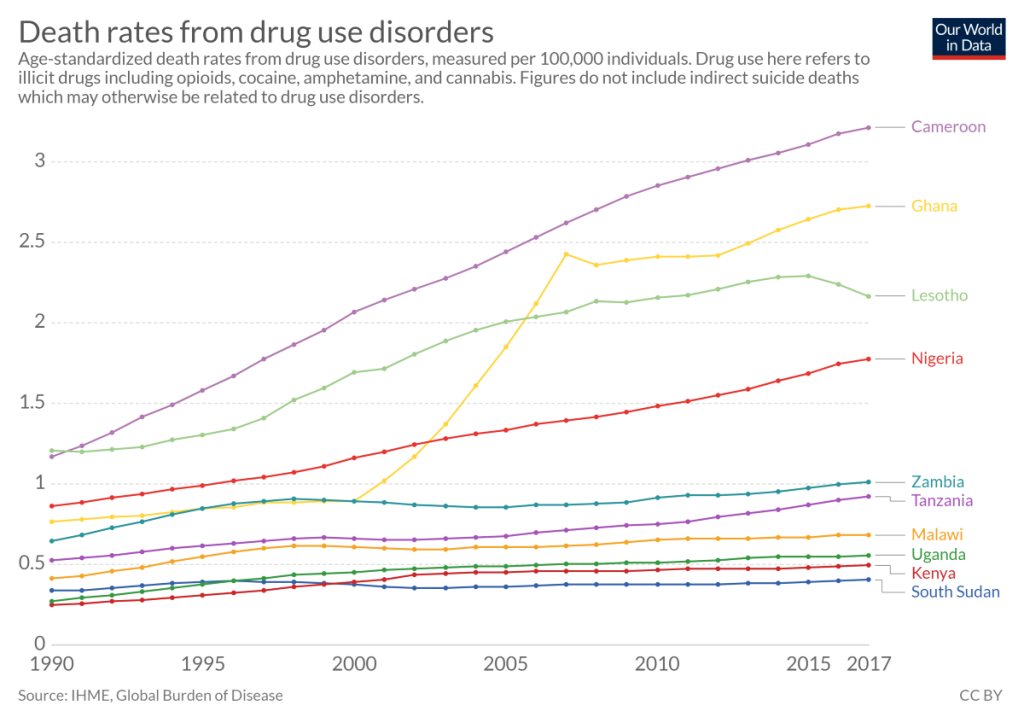
Death rates from drug use disorders in sub-Saharan Africa
In the 10 countries that ASEC serves, deaths from drug use disorders are highest in Cameroon at a rate of 3.21/100,000 individuals.
It’s also clear that there’s been an alarming increase in drug use disorders in Ghana, spiking from a rate of .89/100,000 individuals in 2000 to 2.72/100,000 individuals in 2017.
The rate of death from drug use disorders in the ten African countries ASEC serves is as follows:
- Cameroon 3.21
- Ghana 2.72
- Lesotho 2.17
- Nigeria 1.78
- Zambia 1.01
- Tanzania 0.92
- Malawi 0.68
- Uganda 0.56
- Kenya 0.49
- South Sudan 0.40
(per 100,000 individuals in 2017) Source
The impact of drug abuse on a developing countries
Drug abuse in developing countries has effects both on the economy and the society at large. Drug abuse can affect work, employment and productivity.
There’s also a cost[2] that will be created by the increased drug abuse in developing countries. More drugs and drug use means increased budgets for:
- law enforcement
- justice system and courts
- healthcare (illness, premature death, emergency room visits)
- reduced productivity
The impact of drug abuse on the community
There is often a strong correlation between unemployment and drug-taking habits, both in developed and developing countries.[3] There are also linked between drug abuse and low productivity and accidents. Overall, an increase in drug abuse can also affect the safety of a community.
The disintegration of the family also adds to substance abuse problems.[4] In a study by UNRISD and the United Nations University on Mexico, it was determined that drug use correlates more strongly with disintegration of the family than with poverty.[5]
Drugs can also increase the likelihood of many kinds of criminal activity in developing countries. Violent conflicts among competing trafficking groups can become problematic. Those needing money to feed their drug habit may turn to theft, robbery and prostitution.[6]
The effects of drug use on education
Youth that become addicted to drugs can suffer from intellectual impairment, short-term memory loss and even impaired sensory function.[7] All of these problems in combination with the addiction itself will contribute to poor academic performance and low self esteem. A low self-image may lead to depression or an even greater dependence on drugs. It’s a vicious cycle for our youth.[8]
Education can also be a important point of intervention for the prevention of drug abuse.[9]
Reducing drug use in developing countries
The United Nations (UN) also works to combat drug abuse and trafficking by reviewing strategies each year. In April 2016, the UN General Assembly held a Special Session on Drugs[10] titled, The World Drug Problem. This session marked an important milestone in achieving the goals set in the policy document of 2009 (“Political Declaration and Plan of Action on International Cooperation towards an Integrated and Balanced Strategy to Counter the World Drug Problem”). In the policy, the UN set goals to achieve by 2019. Some of these goals include:
- protect people, particularly children and youth, from drug use initiation
- prevent the progression of severe drug use disorders through early intervention programs
- increase the availability and coverage and quality of prevention programs and tools
- collaborate with stakeholders to increase awareness of the dangers and risks associated with drug abuse
- provide more recreation, sports and cultural activities to promote healthy lifestyles in children and youth
- develop more research on the social, economic and other risk factors leading to increased drug abuse
- strengthen capacity for aftercare for and the rehabilitation, recovery and social reintegration of individuals with substance use disorders
- encourage drug users to participate in treatment program
Catholic Nuns’ role reducing drug abuse in Africa
Catholic nuns dedicate their lives to service. They work tirelessly to improve the conditions of their congregations and communities. Catholic nuns run social welfare programs for those who otherwise do not have access to these important social services. When governments are unable to meet the needs of the people, Catholic nuns often step in to fill the void.
According to a 2014/15 survey conducted by the African Sisters Education Collaborative (ASEC), 30% of the sisters serve in social service-related ministries. The congregations surveyed own 118 healthcare centers and 35 hospitals.[11]
Sr. Maria Telesphora, COLU, ASEC Programs Coordinator in Tanzania, believes that the answer is to care for the youth and raise them as future leaders of the country.
“Education, love, norms and moral aspects are the pillars in the realization of drugs abuse elimination and creation of task force to the economic development.”
She adds,
“We need to provide material and financial support to our youth who are initiating projects in industrial development. This situation goes hand-in-hand with providing quality education. By listening to the youth and engaging them in economic development, we can empower them to be our future leaders.”
Sr. Veronika Francis Timalias, CSR, is an alumna of ASEC’s Sisters Leadership Development Initiative (SLDI) program in Tanzania. She believes that a drop in family values is to blame for a lot of the problems that her country is facing.[12]
“The drastic drop of morality in families is a critical challenge and burning issue to the betterment of the future generation. Why are babysitters playing the role of the parents and the guardian of siblings? Why street children? Why underage pregnancy? Why are students are performing poorly in fundamental primary education? We need to review the moral ethics on the family level and be more responsible to our children.”
So what are Catholic nuns doing to reduce drug use in sub-Saharan Africa? In short… anything and everything they can.
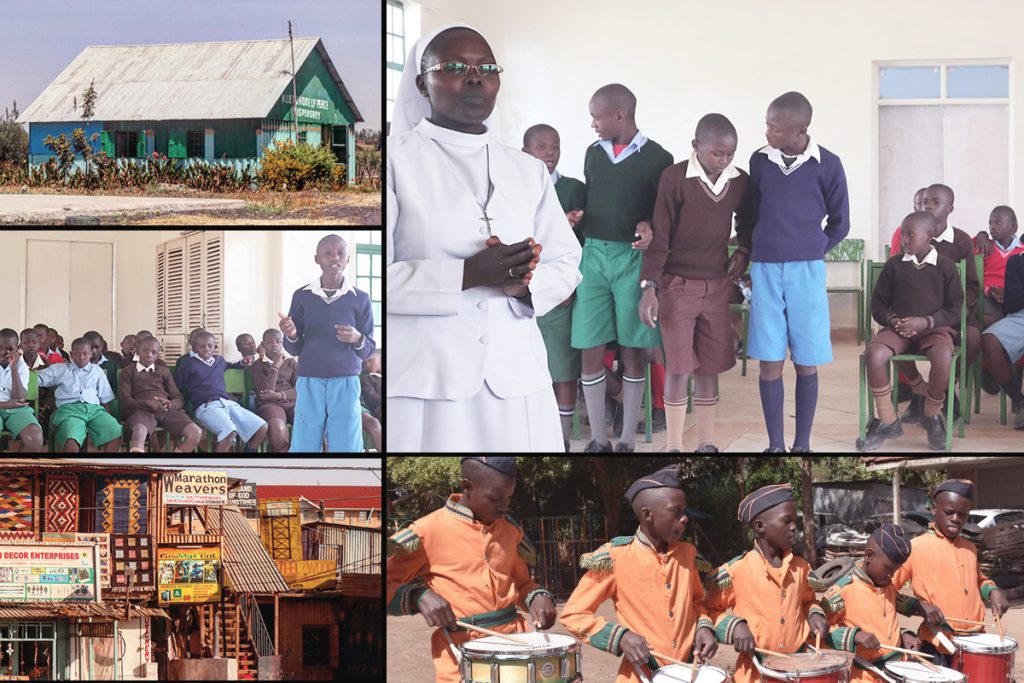
In Nairobi, Kenya orphaned boys as young as eight years old are trapped in a cycle of poverty, homelessness and drug addiction. But Sr. Felistas Chematia Chesire, Assumption Sisters of Eldoret (ASE), offers these boys a second chance at Kwetu Home of Peace; a substance abuse treatment center and school for homeless boys.
After two years at Kwetu Home, the boys “graduate” drug-free with a chance to start over. Unfortunately, only about 1/3 of the boys are rehabilitated.
Sr. Felistas is using the skills she acquired through ASEC’s SLDI and Higher Education for Sisters in Africa (HESA) programs to combat this low success rate. Sr. Felistas continues to use her resource mobilization and financial planning skills to support the boys so they can stay clean. She’s also initiated income-generating projects that will provide jobs to the boys upon graduation. Sr. Felistas is making a big impact that she explains with such humble elegance:
“We take them to school. We change their lives. They become good people and good citizens of the country.”
Overall, Catholic Nuns believe that the youth are the future of the country and they must do everything they can to foster their development. But they can’t do it alone. If the nation puts a plan into action to deal with drugs and illicit trafficking, developing countries like those in sub-Saharan Africa can slow down drug abuse and speed up economic development.
Be a Ray of Hope
Communities across Africa are counting on Catholic Sisters, but 48 lack the education needed to carry out their important mission work. You can be a Ray of Hope for a Sister who needs you by donating to her education today.
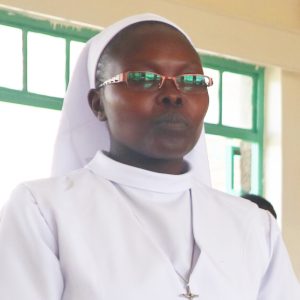
Sr. Felistas Chematia Chesire, ASE
Profiled in articleSLDI & HESA Alumna - Kenya

Sr. Veronika Francis Timalias, CSR
Profiled in articleSLDI Alumna, 2015 - Tanzania